


Selling B2B wholesale in 2024 offers significant opportunities for businesses to reach larger markets and enjoy high-volume orders. With advancements in digital platforms, setting up a B2B wholesale operation is now more straightforward than ever. By utilizing the right strategies and tools, businesses can efficiently manage wholesale operations and meet the needs of other businesses and retailers looking to buy in bulk. This guide provides a detailed overview of the B2B wholesale process, covering everything from the basics to
In this guide, we will discuss the key elements of running a successful B2B wholesale business, including the benefits of B2B sales, the differences between B2B and B2C, and advanced B2B wholesale strategies to streamline your business. Let’s explore the fundamentals of B2B wholesale and learn how you can make the most out of this business model effectively.
What is B2B Wholesale?
B2B wholesale, or business-to-business wholesale, involves selling products in large quantities directly to other businesses rather than individual consumers. This model is essential for supply chains as it provides inventory to retailers, manufacturers, and other organizations that require bulk products to operate their businesses.
In the B2B wholesale model, transactions often involve higher order volumes, custom pricing wholesale volume discounts, and longer sales cycles compared to direct-to-consumer sales. Businesses buy in bulk to benefit from lower per-unit prices and to ensure a steady supply of products. This model allows wholesalers to focus on high-volume sales and efficient distribution, meeting the specific needs of their business customers.
Difference between selling B2B Wholesale and B2C Retail
Selling B2B wholesale and B2C retail involves distinct approaches as each caters to different customer bases and sales processes. In B2B wholesale, the customer base consists of businesses, retailers, or organisations that purchase products in bulk for resale or operational needs. These transactions typically involve large order volumes, custom pricing, and custom payment terms for different customers.
On the other side, B2C retail targets individual consumers, i.e. people who purchase products not for reselling but for their own consumption. B2C generally involves standard pricing for all customers and occasional discounts or promotions to attract buyers. The sales cycle in B2C is generally shorter, with quick transactions and a focus on providing a seamless shopping experience. Customer relationships in B2C are often short-term as they are driven by individual purchases rather than ongoing business needs.
Benefits of selling B2B Wholesale
B2B wholesale offers several significant advantages for businesses which makes it a super attractive model for those looking to expand their operations and increase profitability. Here are some key benefits:
- Higher Order Values – One of the primary benefits of B2B wholesale is the higher average order value. When you sell B2B or wholesale your customers are generally the ones that place large orders as compared to individual consumer purchases. This higher order size can significantly increase your store’s revenue.
- Improved Inventory Management – Selling wholesale or B2B your order volume is high which helps you improve inventory. When you sell wholesale, you ensure that there is a steady movement of inventory and you can reduce storage costs and improve inventory turnover. Efficient inventory management ensures that products are consistently available to meet business demand, reducing the risk of overstocking or stockouts.
- Custom Pricing and Discounts – B2B wholesale allows for flexible pricing strategies, including volume discounts, tiered pricing, and negotiated terms based on order sizes. Custom pricing structures can attract more business clients and encourage larger orders which can further enhance sales and profitability.
- Better Cash Flow – B2B transactions usually involve larger volumes and predictable purchasing patterns, which help create a more stable cash flow. Offering payment terms like Net 30 or Net 60 can further reduce the burden on businesses and allow them to manage their finances more effectively.
- Access to a Broader Market – Expanding into the B2B market opens up opportunities to reach a wider range of industries and business clients. This diversification can help you reduce the dependence on one single channel and bring more stability to your business operations.
Effective Strategies for B2B Wholesale
- Custom Pricing and Discounts – Tailor your pricing strategies to meet the needs of different business clients. Offer volume discounts, tiered pricing, and personalised quotes based on order sizes and customer relationships. This flexibility can attract more clients and encourage larger purchases. B2B wholesale apps like Wholesale Pricing Discount B2B can help you set up custom pricing and discounts on your Shopify store.

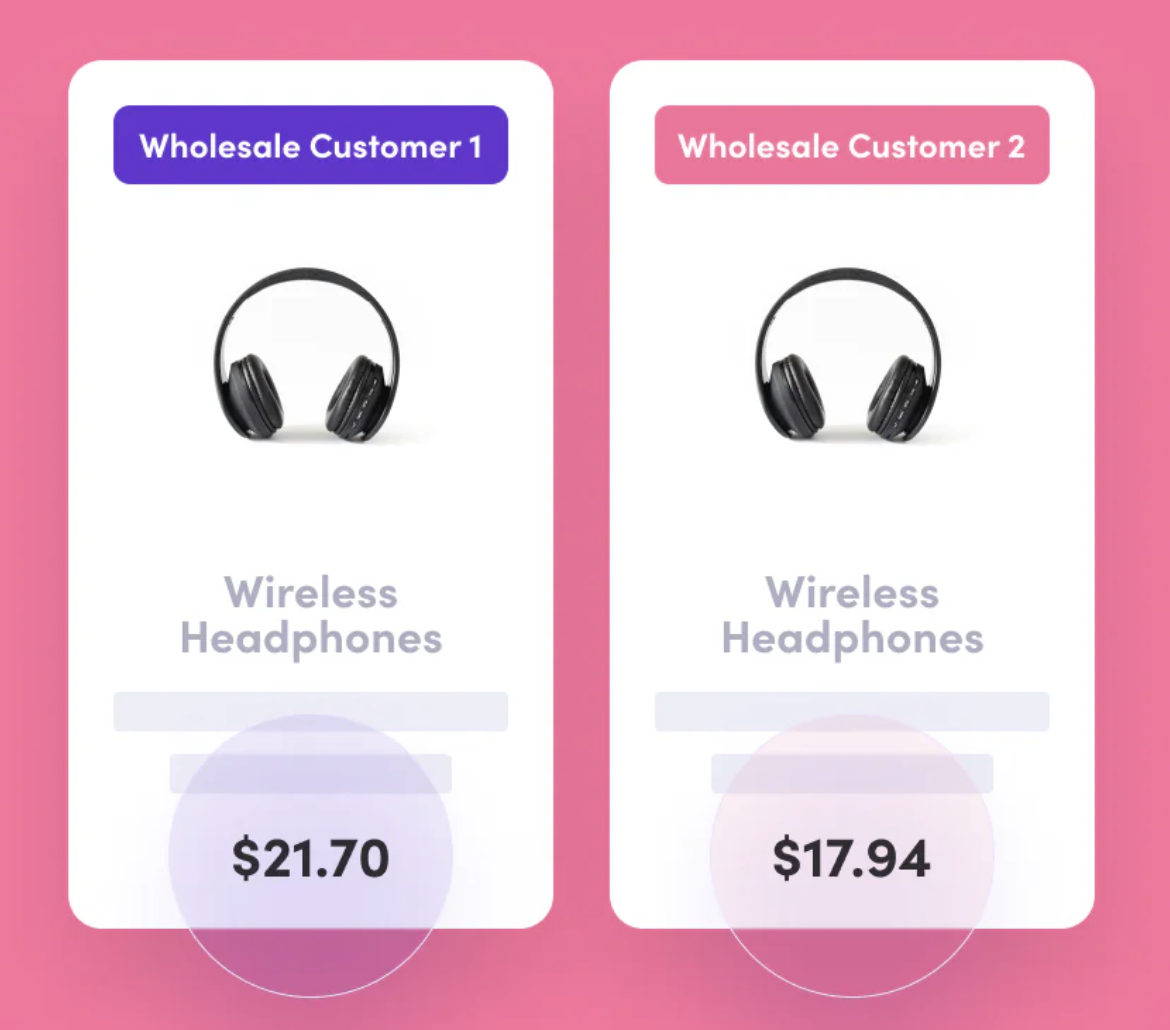
- Efficient Bulk Ordering – Simplify the bulk ordering process by incorporating user-friendly bulk order forms and automated systems. This makes it super easy for your customers to place bulk orders quickly and efficiently which ultimately improves their overall shopping experience.
- Create a personalised shopping experience – Create products and collections that are only for your specific B2B or wholesale customers. These exclusive products can help you create exclusivity and also enable you to run a combined B2B+B2C store.
- Strong Customer Support – Provide excellent customer service by being responsive and addressing client inquiries and issues promptly. Building a dedicated support team that understands the unique needs of wholesale clients can enhance customer satisfaction and loyalty.
- Effective Marketing and Outreach – Utilize targeted marketing strategies to reach potential B2B clients. This includes SEO, content marketing, email campaigns, and participation in industry trade shows and online forums.
- Building Long-Term Relationships – When you sell B2B, you need to be in touch with your customers frequently, understand their needs, and build and maintain long-term relationships with your clients. Regular communication, personalized service, and consistent quality can foster loyalty and lead to repeat business, providing a stable and reliable revenue stream.
- Innovative Product Offerings – Keep your product offerings fresh and relevant by regularly introducing new products and staying updated with industry trends. This can help meet the evolving needs of your customers and keep them coming back to your store regularly.
Conclusion
B2B wholesale presents a robust opportunity for businesses to expand their market reach, increase revenue, and build long-term client relationships. By understanding the unique dynamics of B2B wholesale, such as higher order values, improved inventory management, and flexible pricing strategies, businesses can create a stable and profitable operation. Embracing these benefits and focusing on strong customer support and data-driven decision-making will ensure that your wholesale business remains competitive and responsive to market changes.
Implementing effective strategies like tailored pricing, efficient bulk ordering, and continuous innovation in product offerings can further enhance your B2B wholesale operations. By leveraging the right tools and approaches, you can position your wholesale business for sustained success and growth, meeting the diverse needs of business clients and driving your overall profitability.